
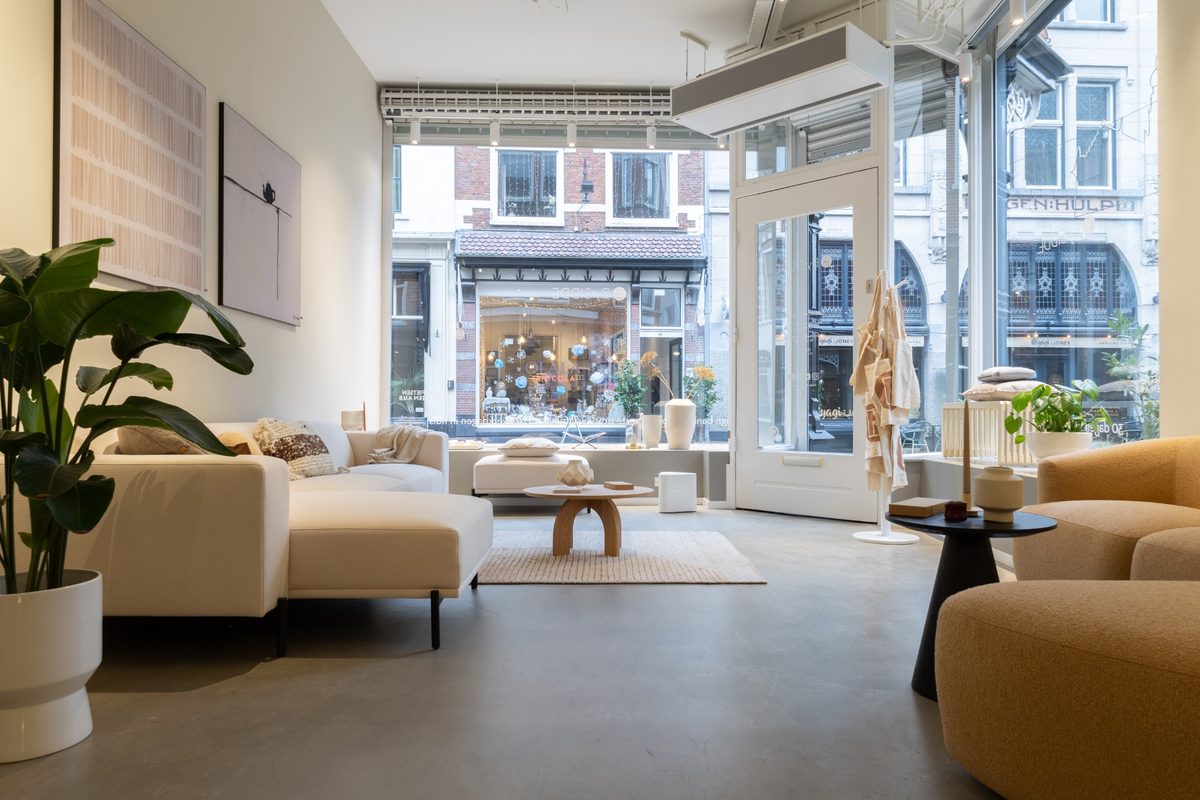
A smart showroom visit starts at home. Measure your space, take photos of your living room, and think about how you will use the sofa every day. Then, in the showroom, you will not only look at what looks good, but also compare size, comfort, shape, and material more effectively. With this practical checklist, you can quickly rule out models from all sofas, ask better questions, and choose a sofa that not only suits your style, but also your space and daily use. Also read what to look for when buying a new sofa beforehand.
Measure and take these things with you from home
- Measure not only the area where the sofa will be placed, but also the route into the room. Think about doorframes, hallways, stairs, and turns, so that the size not only fits in the living room but can also be delivered. Also check out these tips for the delivery of your new sofa beforehand.
- Take a simple floor plan, individual measurements, photos, and short videos of the space with you. This way, in the showroom, you can more quickly assess whether a model matches your layout, sightlines, and free walking space, and avoid forgetting anything.
- Mark out the dimensions at home with tape, boxes, or newspapers to get a feel for the scale. If an AR tool is available, you can also use it to check beforehand how the sofa visually fits in the space.
Narrow down your style to three clear options
- Collect inspirational images that really appeal to you. Look not only at color, but also at shape: sleek or organic, airy on legs or low and compact, understated or bold.
- Choose a few clear style preferences beforehand. Think of a high or low base, loose or fixed cushions, narrow or wider armrests, and a neutral or more colorful upholstery.
- Place your preference next to the rest of your interior. A sofa can look beautiful on its own, but it must also match your floor, wall colors, natural light, and the atmosphere you have already created at home.
- Choose the sofa first as the main piece. Paint, throw pillows, and smaller styling elements are easier to adjust later than the other way around.
Think about how you will really use the sofa
Do not start with the most beautiful model, but with your daily routine. Do you usually sit upright with guests, lounge in front of the TV in the evening, or sometimes work on the sofa? Then your preferences for seat depth, support, and size will change accordingly. Also look honestly at the number of seats you really need. Sometimes a pouf or extra element is smarter than automatically choosing a larger sofa. If you have children, pets, or intensive daily use, include that in your shortlist of models and fabrics right away.
Which shape and arrangement work in your living room?
Test seat comfort as if you were already at home
- Do not just sit neatly for a moment. Test the sofa as you would at home: upright, lounging, lying down, and when getting up.
- Be consciously aware of seat height, seat depth, backrest height, and the support of the armrests. What feels comfortable depends on your height and sitting style.
- Compare models directly next to each other for firmness, softness, and the difference between loose and fixed cushions.
- Also ask whether accessories such as headrests change the comfort if you like to sit for longer or want extra neck support, and check out the frequently asked questions about test sitting beforehand.
Ask about fabric, color, quality, and maintenance
You do not choose upholstery based on appearance alone. Also pay attention to how warm or smooth a fabric feels, how sensitive it is to stains, and how much maintenance you want to put into it. Sunlight plays a role here: a color can look very different in bright daylight than in the showroom. Also ask about the frame and filling, because these are precisely what determine the seating feel and use in the long term. If you are unsure about color or texture, take fabric samples home. At By SIDDE, you can also request a free fabric sample kit.
Do not forget the rest of your seating area
A sofa is never isolated in the space. Therefore, check whether the scale matches your rug, coffee table, and the free space around it. A rug that is too large or a table that is too small can throw the proportions out of balance, even if the sofa itself is well chosen. Also pay attention to how materials, colors, and textures come together in cushions and accessories. Use inspirational images to test combinations, but keep the sofa as the main choice. Around it, you can build the rest of the seating area much more easily into one calm whole.
